loan underwriting tool

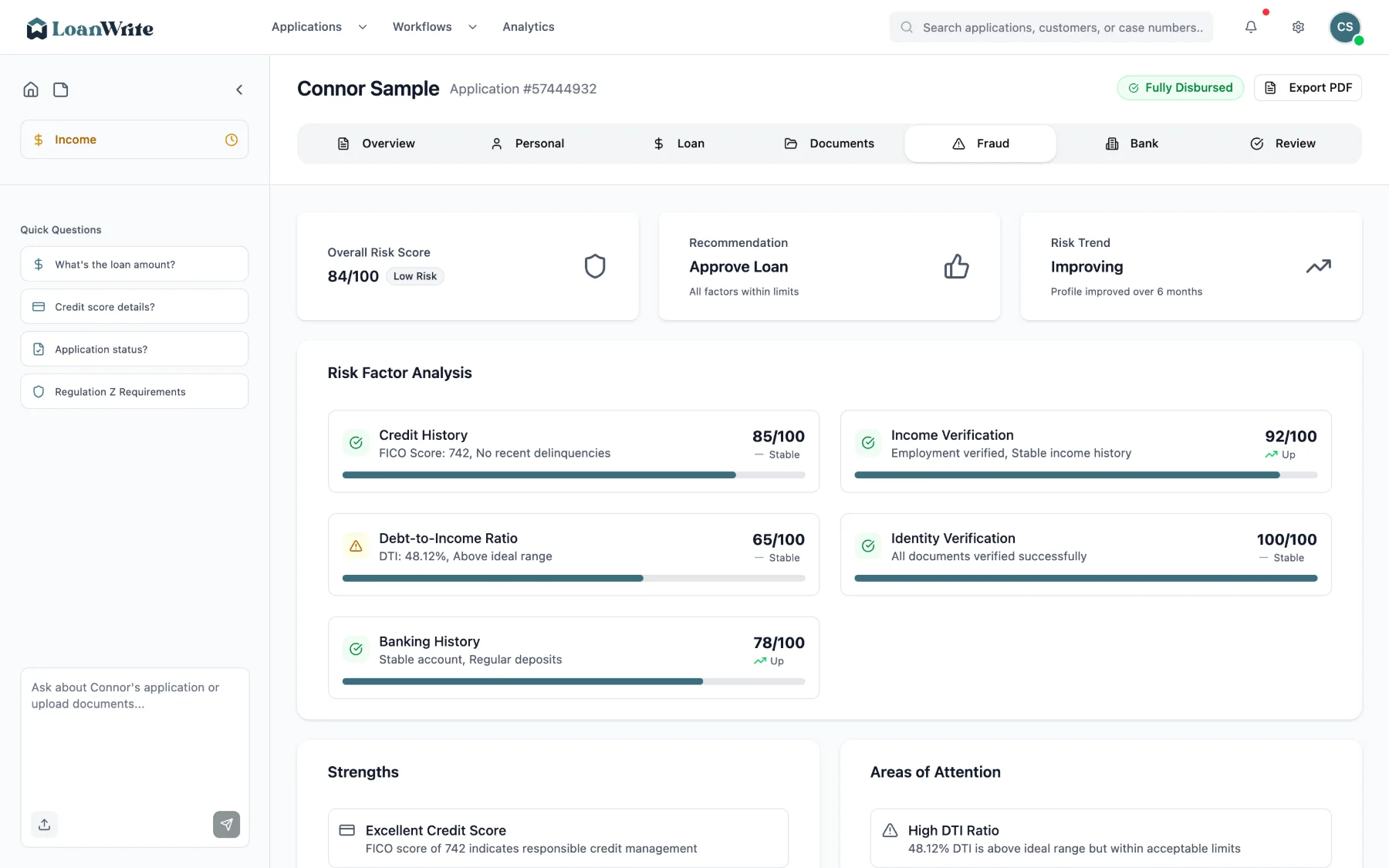
LoanWrite loan file showing the risk factor analysis

my role

senior product/ux designer

project timeline

internal tool | splash financial

team & stakeholders

product: 1 | engineering | internal ops


about this project

At Splash Financial, I redesigned the internal tool our underwriters used to review and decide loan applications. That tool is live and still in use, but it’s Splash’s IP and covered by my contracts, so I can’t share it here.

To show the work, I recreated it as LoanWrite, a replica of the tool I redesigned, rebuilt with sample data. The screens on this page come from the recreation. The thinking, structure, and results come from the real thing.

Underwriters were jumping between origination systems, document folders, credit reports, bank data, and compliance checklists to decide a single loan file. The redesign brought that into one workspace: a risk-scored applications table, a seven-tab file view, and workflow queues. I worked closely with the PM, the developers, and the internal ops team who used it every day, and tested ideas with ops early so feedback came from real use.

The problem

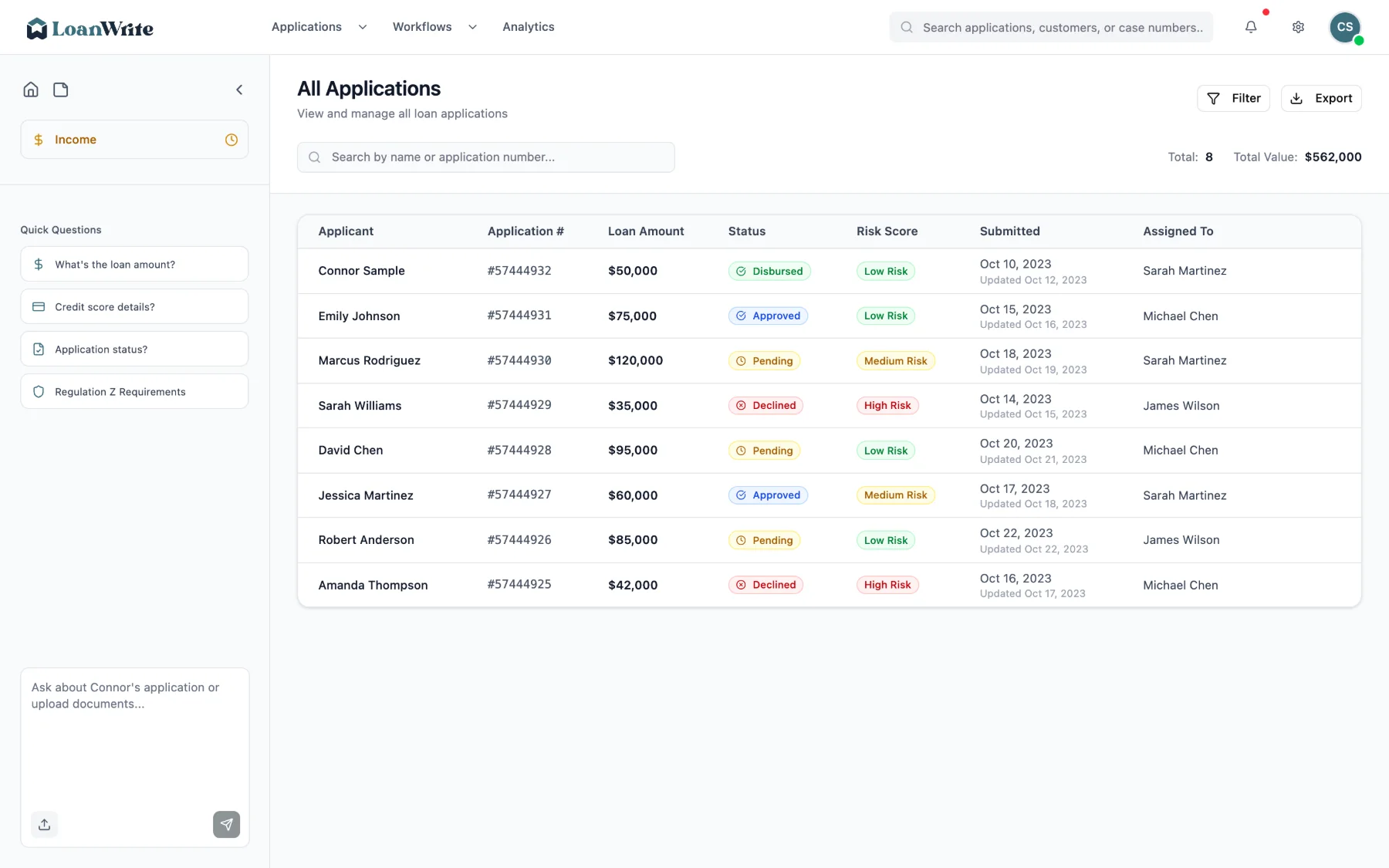
applications table with loan amount, status, risk score and owner

problem 1

triage takes too long

Every morning starts with a pile of applications and no quick way to see which ones need attention first. Underwriters spent the start of their day sorting instead of deciding.

I designed one table with loan amount, status, risk score, submission date, and owner. Risk is scored the moment an application lands, so the files that need attention rise to the top and the pile becomes a list.

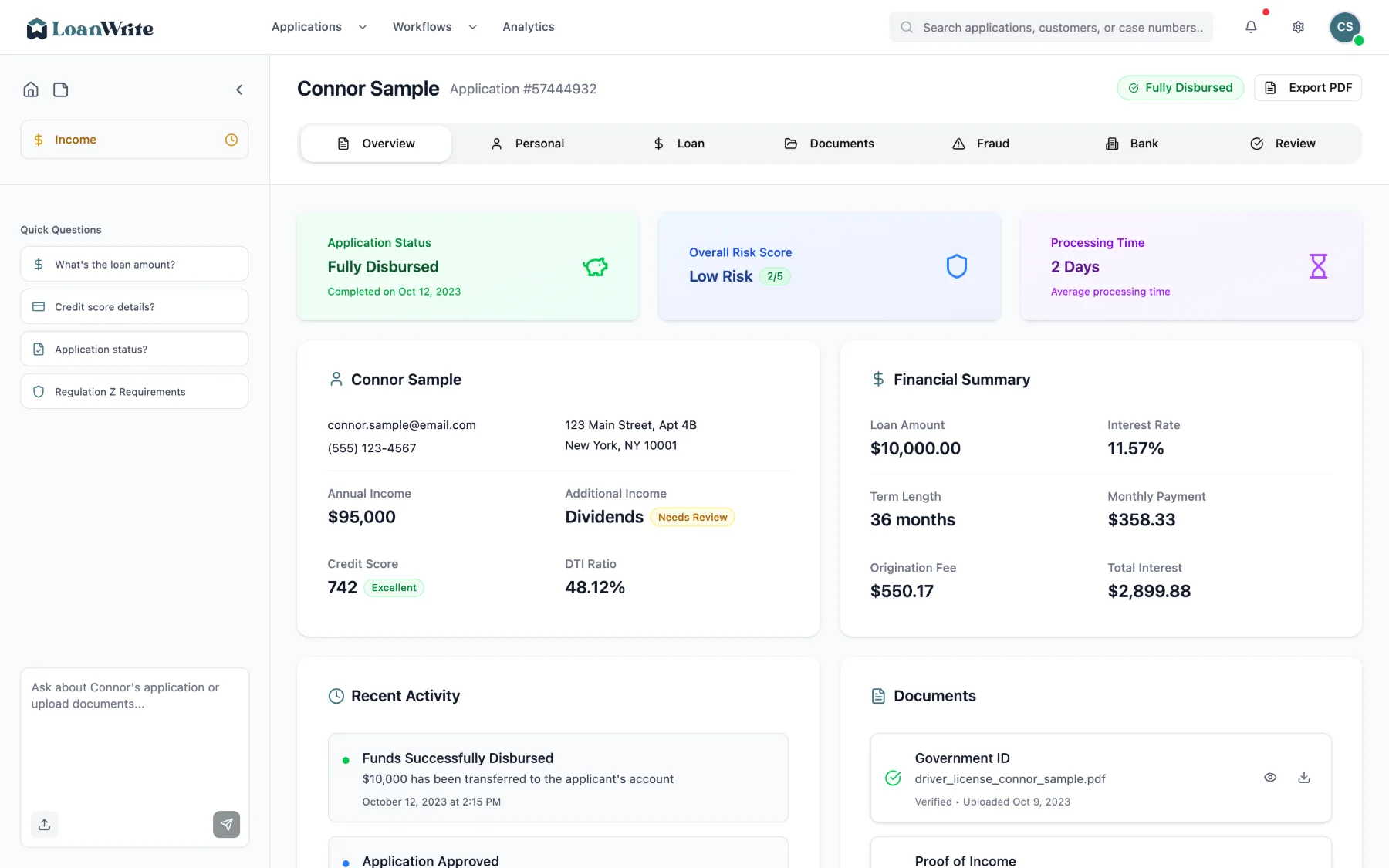
loan file overview with status, risk score and processing time

problem 2

context is scattered

Personal details, loan terms, documents, fraud checks, and bank data each lived in a separate system, so getting up to speed on one file meant opening tab after tab.

I organized the file into seven tabs: overview, personal, loan, documents, fraud, bank, and review. Each file opens on its status, overall risk, and processing time, so an underwriter knows where things stand before digging in.

risk factor analysis broken into five scored factors

problem 3

risk is a black box

A single score hides why a file is risky, so reviewers ended up working it out again by hand before they felt comfortable making a decision.

I broke the score into its factors: credit history, debt-to-income, banking history, income, and identity, each with strengths and areas that need attention. Underwriters can verify a decision instead of redoing it.

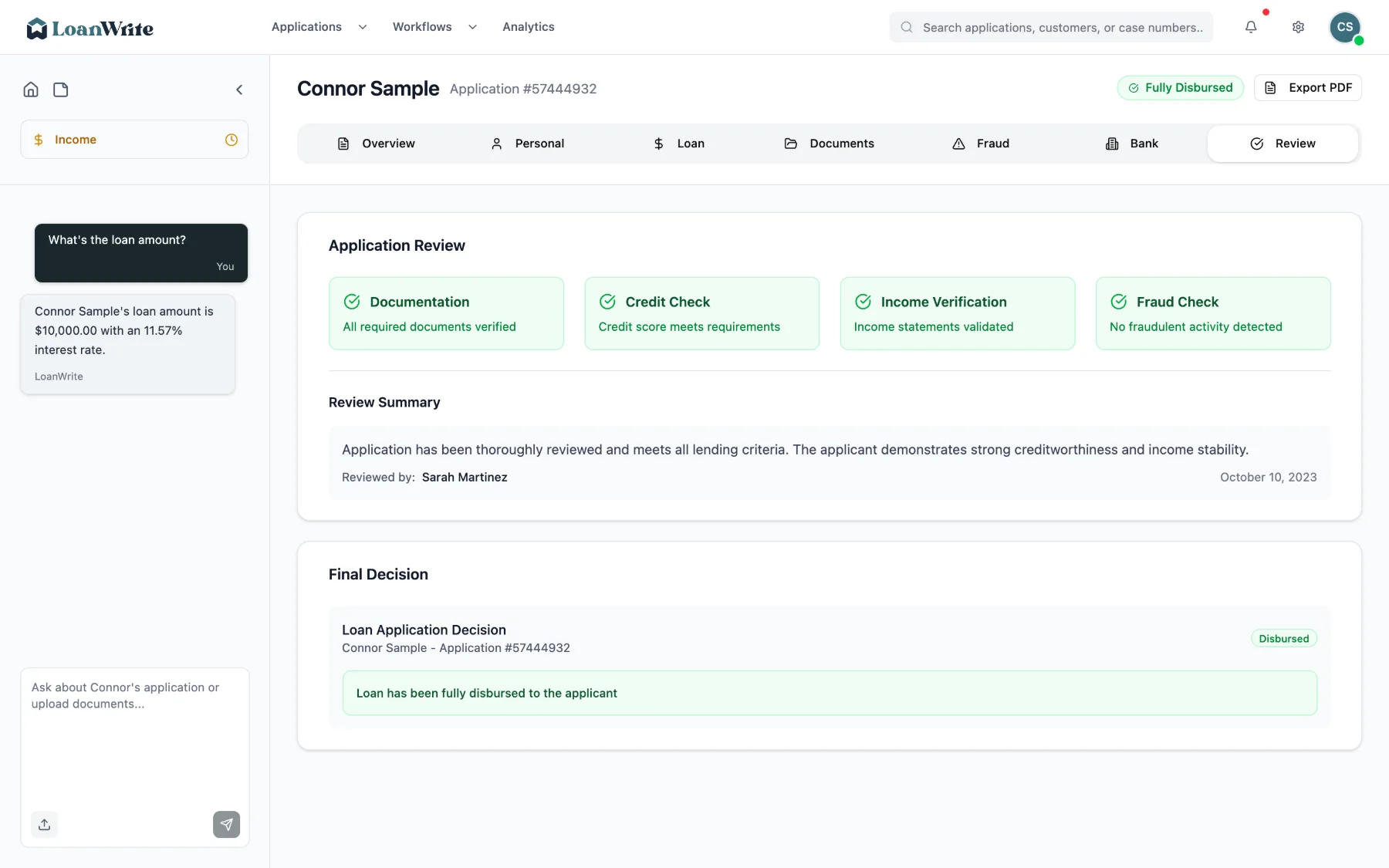
AI copilot answering a question about the current loan file

problem 4

answers require digging

Simple questions like the loan amount or what Regulation Z requires meant opening five screens or leaving the tool entirely.

I designed an AI copilot in the sidebar with quick questions, free-form chat about the current file, and built-in Regulation Z guidance. It’s scoped to the file in front of you, so the context never gets lost.

“how might an underwriter understand any loan file in a couple of minutes, and ask it questions?”
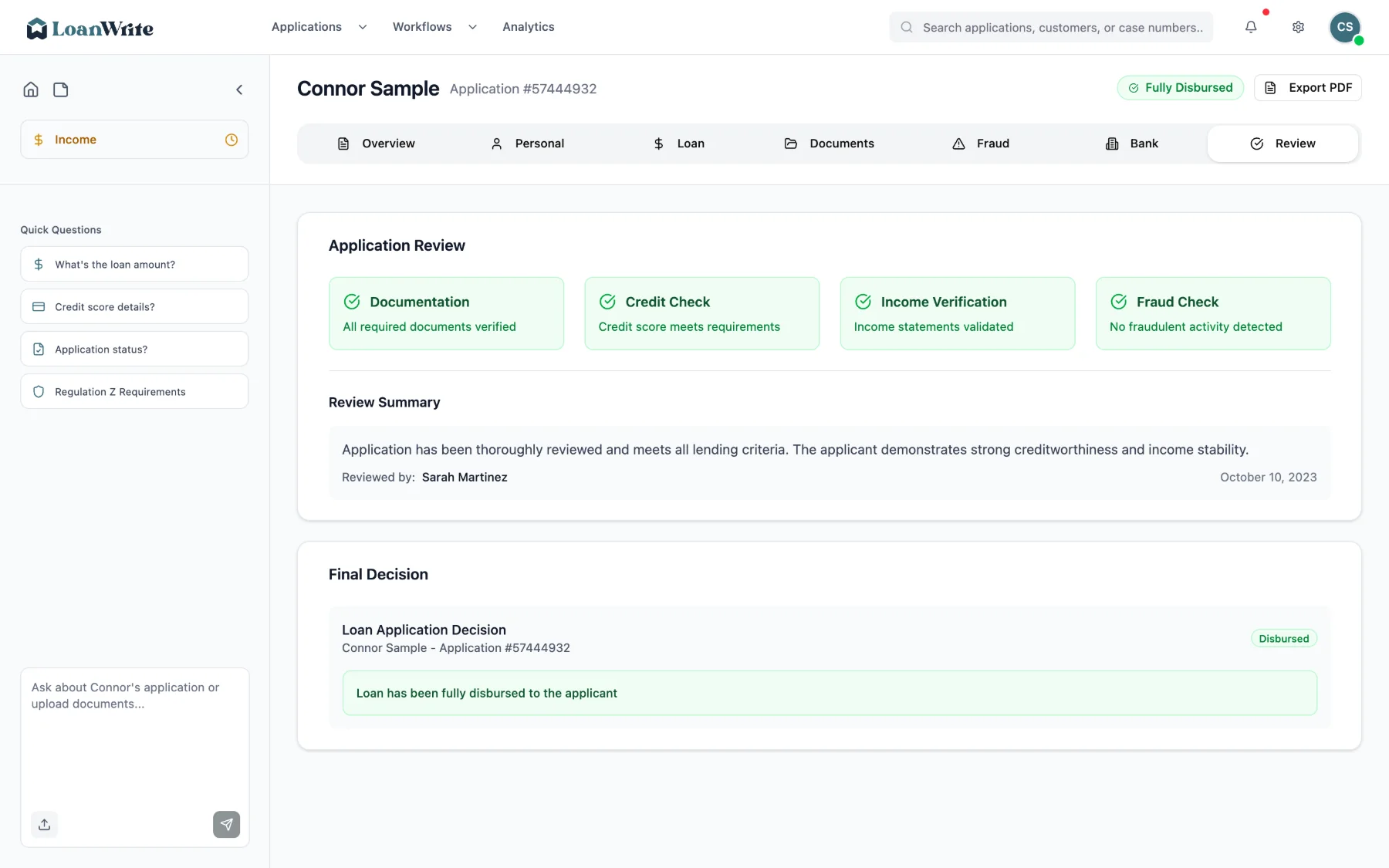
loan file review tab

Business goals

Help the underwriting team decide more files each day without adding headcount.

Keep every decision explainable and compliant with lending regulations like Regulation Z.

Get a working product in front of ops early, so feedback shapes the tool before it’s locked in.

User goals

Get up to speed on any loan file in a couple of minutes, without jumping between systems.

Trust the risk score by seeing exactly which factors drive it and what needs a closer look.

Get quick answers about the file in front of them, right where they’re working.

let's make things happen

Reach out if you're looking for a product designer who can help you ship & scale user-friendly products.
A recreation, not the original

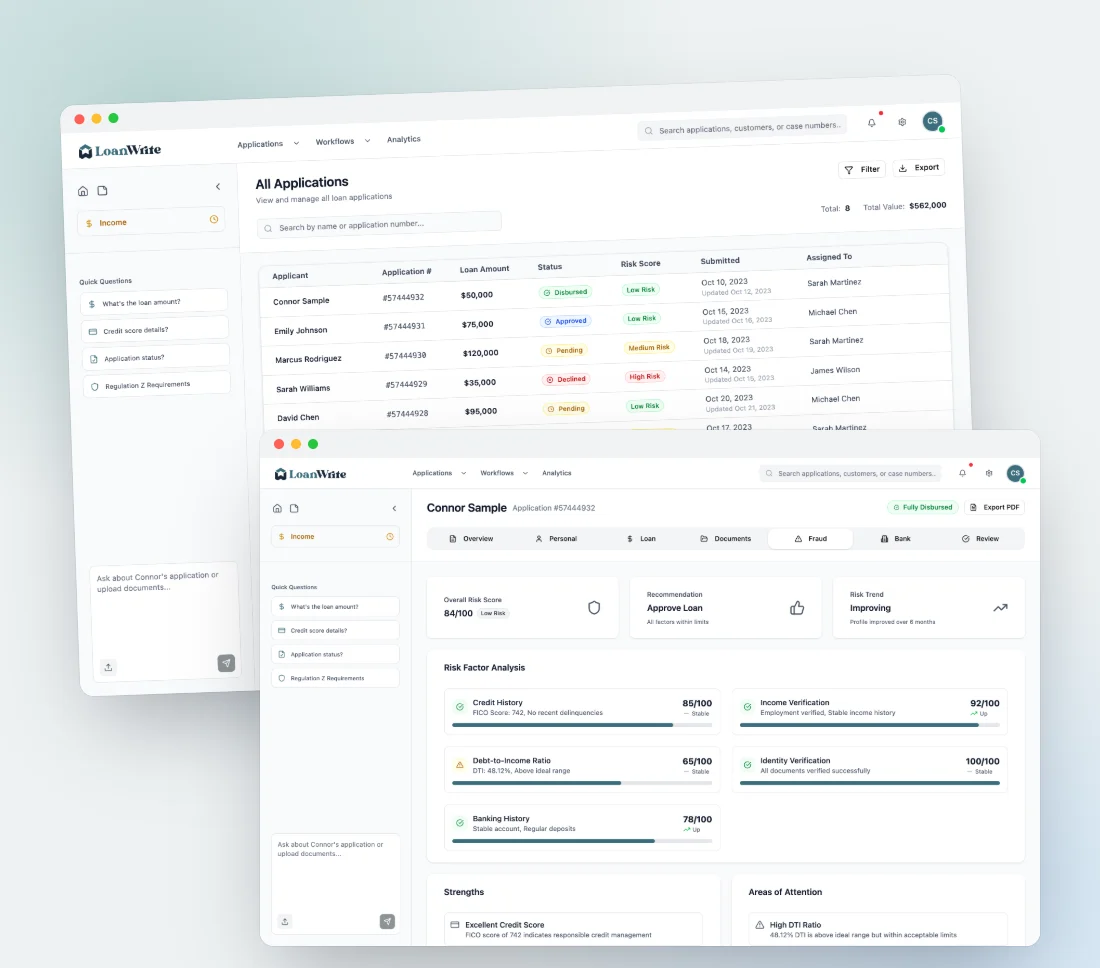
The real underwriting tool lives inside Splash Financial and is their IP, so I can’t show it. LoanWrite is my replication of the tool I redesigned. It follows the same structure and decisions, with sample data in place of real borrowers, so you can click through how it works.

LoanWrite recreation: applications table and loan file risk analysis
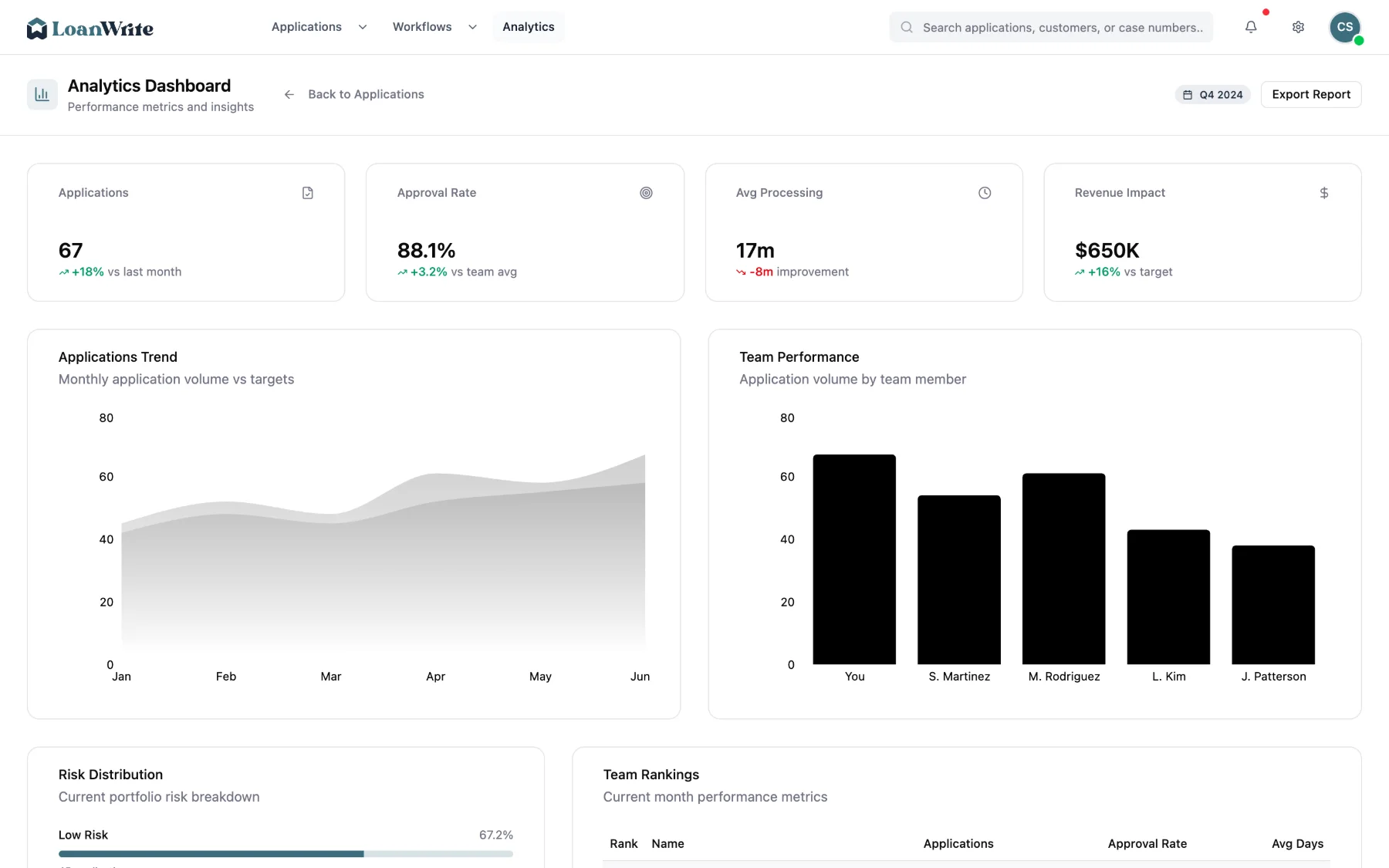
analytics dashboard with volume, approval rates and processing time

Analytics that close the loop

Volume, approval rates, and processing time by queue, so ops leads can see where files stall and rebalance work across the team.

results

+300%

increase in same-day approvals

+270%

more applications processed per underwriter per day

+143%

increase in closed applications

−36%

reduction in staff needed

$200K/mo

saved in operations

$300K/yr

saved in vendor fees